Assistive Listening Devices in Red Deer
Beyond hearing aids — tools that make conversations, TV, phone calls, and daily life easier to hear.
Beyond hearing aids — tools that make conversations, TV, phone calls, and daily life easier to hear.
Hearing aids are a powerful solution for most situations — but some environments present unique challenges that benefit from additional technology. Assistive listening devices (ALDs) are designed to help in specific situations: a noisy restaurant, a long-distance phone call, the TV late at night, or a meeting room with poor acoustics.
ALDs can be used alongside hearing aids or on their own for people with mild hearing difficulties who don’t yet need amplification all day. Many pair wirelessly with modern hearing aids to stream audio directly to your ears with remarkable clarity.
At Red Deer Hearing Aids, we’ll help you understand which devices could make the biggest difference in your daily life and show you how to use them effectively.
There’s a wide range of ALDs designed for different listening situations. Here are the most commonly used.
Stream TV audio directly to your hearing aids or a personal receiver at your own volume — without turning up the TV for everyone else. A popular solution for couples with different hearing levels.
A small clip-on microphone worn by a conversation partner transmits their voice directly to your hearing aids. Ideal for noisy restaurants, cars, or one-on-one meetings where distance reduces clarity.
Phones with built-in amplification and tone control make phone conversations much easier for people with hearing loss — with or without hearing aids.
Visual and vibrating alerts for doorbells, smoke alarms, alarm clocks, and phone calls — so important sounds never go unnoticed at home.
Hearing loop systems broadcast sound via electromagnetic signal directly to hearing aids with a telecoil setting — often installed in theatres, churches, and public venues across Canada.
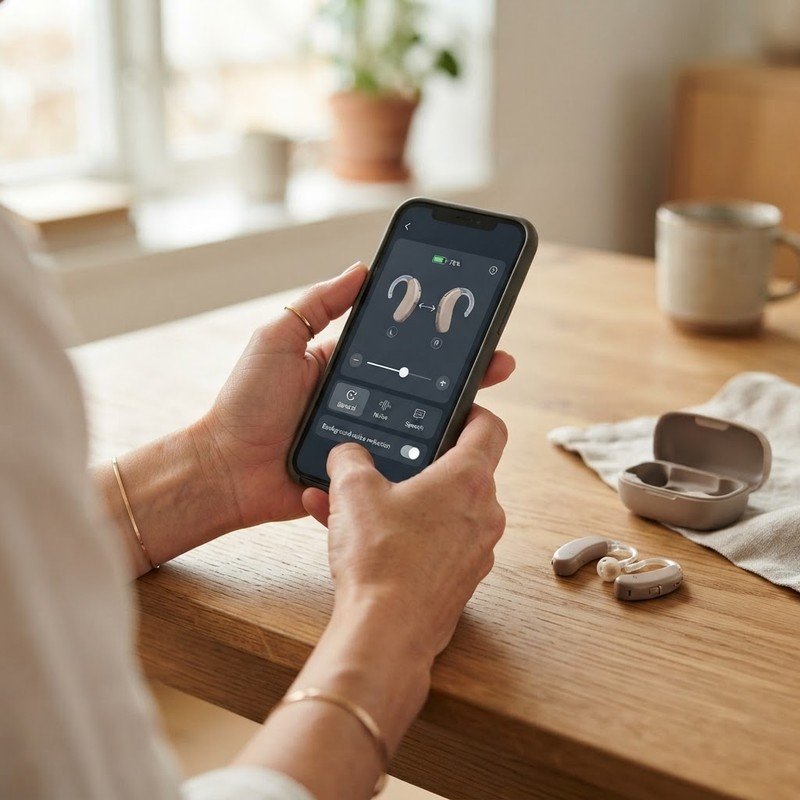
Connect your hearing aids to your smartphone, tablet, or laptop and stream calls, music, and audio directly — many modern hearing aids do this natively without any additional device.
ALDs aren’t just for people with severe hearing loss — they help anyone who struggles in specific listening situations.
Hearing aid wearers who want better clarity in noisy group settings
People who find TV or phone conversations difficult even with hearing aids
Those with mild hearing loss who don’t yet need hearing aids full-time
Anyone who wants to stay safely connected to household alerts and alarms
Frequent theatre, church, or public venue attendees who want loop access
Professionals who need to follow meetings, calls, or presentations clearly