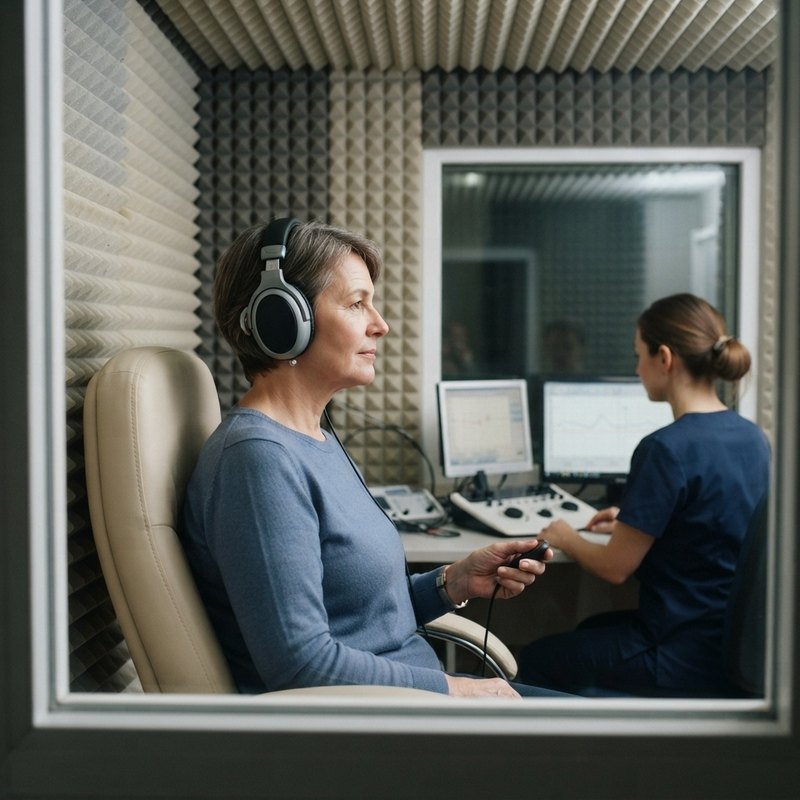
When to Book a Hearing Assessment
We recommend a hearing assessment when sounds become less clear, conversations take more effort, or tinnitus affects daily comfort.
We recommend a hearing assessment when sounds become less clear, conversations take more effort, or tinnitus affects daily comfort.
We encourage adults to book a hearing test when they often ask people to repeat themselves, especially in restaurants, meetings, or family gatherings. Difficulty following speech with background noise can appear before people notice problems in quiet rooms. Other common signs include:
Turning up the TV, phone, or radio volume beyond what others prefer
Missing doorbells, alarms, phone notifications, or traffic sounds
Feeling tired after conversations because listening requires extra concentration
Hearing speech but finding certain words unclear
Avoiding social situations because communication feels difficult
Hearing loss can develop gradually, so family members may notice changes first. We use the assessment to build a personalized hearing profile based on measured hearing levels, daily environments, listening preferences, and communication needs.
A hearing assessment measures how quietly we can hear tones across different pitches and how clearly we understand speech. We also review ear health, hearing history, noise exposure, medications, and concerns such as pressure or discomfort.
Results help us explain whether hearing aids may help and which features fit the person’s routine. For example, we can discuss rechargeable devices, discreet designs, Bluetooth connections, and AI noise adaptation for changing environments.
During hearing tests, we may check:
| Test area | What it helps us identify |
|---|---|
| Pure-tone hearing | Hearing thresholds for low, middle, and high frequencies |
| Speech testing | Ability to understand spoken words at different volumes |
| Middle-ear testing | Possible concerns involving the eardrum or middle ear |
| Otoscopy | Visible earwax, irritation, or other concerns in the ear canal |
We recommend an assessment for tinnitus, which may sound like ringing, buzzing, hissing, clicking, or humming in one or both ears. Tinnitus often occurs with hearing loss, but it can also relate to noise exposure, earwax, medication changes, or other hearing health concerns.
We ask when the sound began, whether it changes with movement, and how it affects sleep, focus, and stress. This information supports appropriate guidance and, when needed, referral for medical evaluation.
Seek prompt medical care for sudden hearing loss, new tinnitus in one ear, tinnitus that follows a heartbeat, severe dizziness, ear pain, or drainage. When hearing aids are appropriate, we can adjust settings remotely and support an at-home trial so users can assess comfort and clarity in their usual environments.