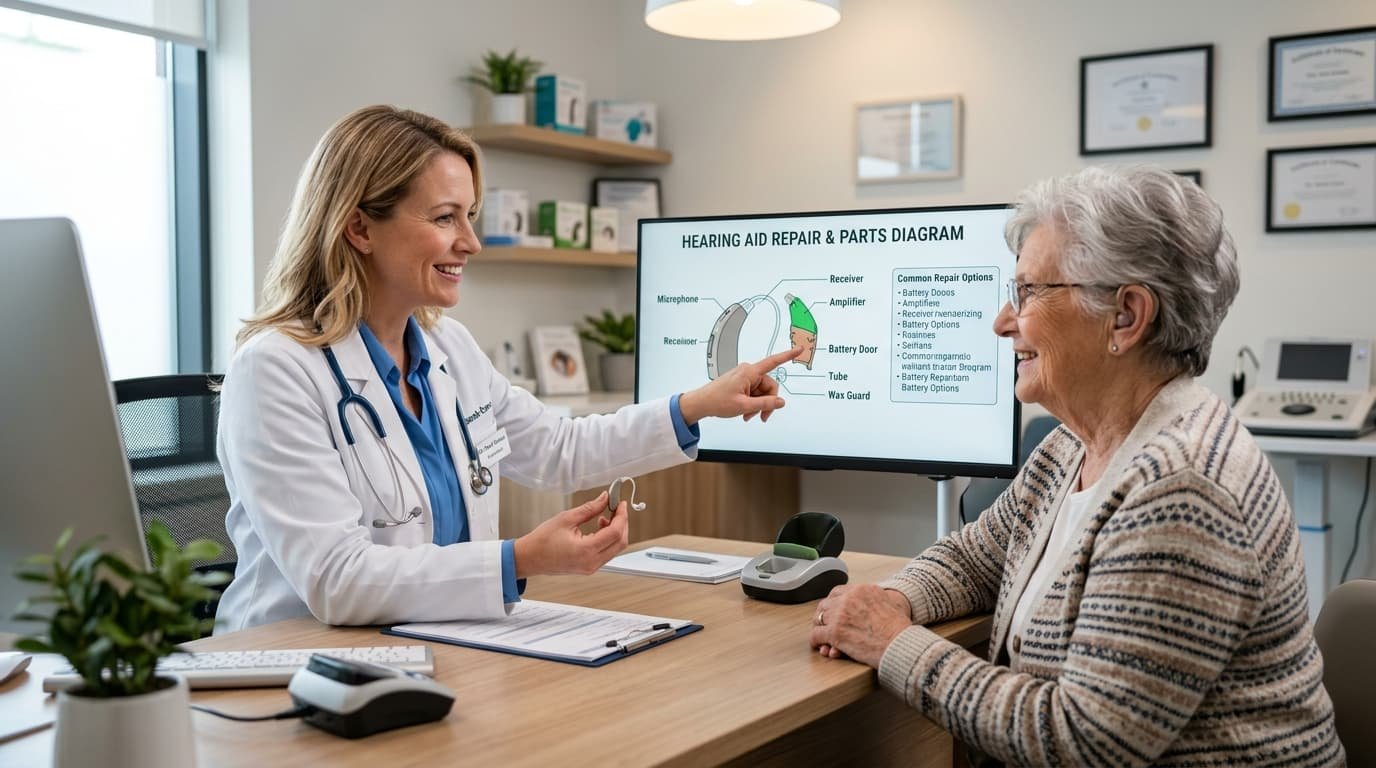
Ongoing Service, Adjustments, and Repairs
Fine-tuning, repairs, routine maintenance, and earwax removal to keep your hearing aids performing well.
Fine-tuning, repairs, routine maintenance, and earwax removal to keep your hearing aids performing well.
We provide hearing care services that keep devices comfortable, clear, and suited to changing hearing needs. Our Red Deer hearing clinics support fine-tuning, hearing aid repair, routine maintenance, and earwax removal assessments.
We schedule follow-up appointments after fitting to confirm that your hearing aids match your personalized hearing profile. We review speech clarity, comfort, volume tolerance, and performance in the places you use most, such as restaurants, meetings, vehicles, and at home.
During an appointment, we can adjust programs, directional microphones, feedback control, and AI noise-adaptation settings. We also check Bluetooth connections to phones, TVs, tablets, and other paired devices.
Remote audiologist adjustments may be available for compatible hearing aids. Through the manufacturer’s app, we can make suitable changes without requiring every adjustment to occur in person.
We also review practical concerns, including charging routines, cleaning steps, and fit. If your hearing, lifestyle, or sound preferences have changed, we update device settings rather than relying on the original fitting alone.
We inspect hearing aids when sound becomes weak, distorted, intermittent, or absent. Common causes include blocked wax guards, moisture, worn receivers, damaged tubing, depleted batteries, charging faults, or microphone blockage.
Our hearing aid repair process begins with an in-clinic assessment. We identify issues that can be resolved during the visit and explain when a manufacturer repair is required.
During a repair visit, we typically check:
| Maintenance check | Why it matters |
|---|---|
| Receiver and microphone inspection | Helps identify reduced sound or intermittent performance |
| Wax guard and dome replacement | Keeps sound ports open and supports hygiene |
| Charger and battery testing | Confirms reliable daily power for rechargeable devices |
| Bluetooth connection review | Restores streaming and app control where applicable |
We recommend bringing both hearing aids, the charger, and any relevant accessories to repair appointments. For rechargeable models, we can also discuss battery recycling or trade-in options when a device reaches the end of its useful service life.
Earwax can reduce hearing aid performance by blocking the receiver, wax guard, or ear canal. It can also cause a plugged sensation, whistling, discomfort, or reduced benefit even when the device itself is working correctly.
We examine the ear canal before making major programming changes. If wax affects hearing health or device performance, we explain the appropriate earwax removal option based on what we observe and the services available at our hearing clinics.
Avoid inserting cotton swabs, hairpins, or other objects into the ear canal. These items can push wax deeper, irritate the skin, or damage a hearing aid if used near the device.
After earwax removal, we recheck hearing aid fit and sound quality. We can replace blocked wax guards and show you how to clean domes, microphones, and charging contacts safely between visits.